"There's a story behind everything."
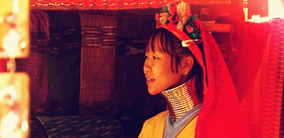
As a child, Dr. Maia always accompanied her father to work in rural areas throughout Thailand and neighbouring countries. Although she decided not to follow closely her father's footsteps, this has greatly impacted her work missions.
Long been interested in the life of people living in rural areas, Dr. Maia decided to take a teaching position at Chiang Mai University, the first university in the north of Thailand.
Apart from teaching, Dr. Maia immensely enjoys exploring the northern culture and languages. She sometimes conducts some small-scaled problem-based research studies to design a development program for some areas.
Senior curators, historians, and scholars whom she personally contacted for advices and guidances are also her great assistance; they not only gave her further explanation of the way of life of people in the area she was working on, but also pointed out some cross-cultural understanding and introduced her to some key figures of the area.
Despite her interest in the northern culture and languages, before moving to work in the north, Dr. Maia had, for years, worked with senior architects and senior curators, some of them worked for National Museums. She always expressed her deep passion in studying local culture, Thai architecture and Buddhist philosophy and she from time to time assisted them in working on Thai to English translation.
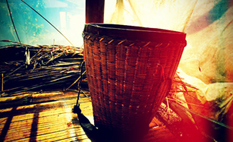
Tribal textile arts also attract her attention while off-work. Her mother has developed a deep commitment in exploring local textiles and such has passed down to her, coupled with curiosity of how each pattern is formed; how each color is naturally dyed; and how the pattern is unique to some specific area.
Besides, Dr. Maia also began experimenting wearing different types of clothes in both traditional way and in modern way; and recently, in her own way.
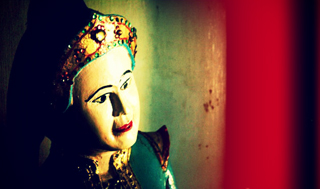
Now, her works on dialects have not limited to those found in her own country, but also extended to neighbouring countries such as Vietnam, Cambodia, Laos, and Myanmar.
With the assistance from local scholars and linguists, Dr. Maia hopes that her works, when complete, will benefit local people, and when used with her health-related research studies, increase their quality of life.
Although she has worked on many projects, she does not ask for research fundings. "I know my works are all small-scaled and before I can be sure that my works are useful for some people, I think I am not qualified for funding."
 Color Naming